
Industry updates, client success stories, and expert perspectives from the team at Pivot Point Consulting.
A large academic medical center acquiring community hospitals, clinics and surgery centers needed more than a replicated reporting system — it needed KPIs and data definitions aligned across a growing health system.
A major academic health center needed expert ambulatory Epic support and a rapid, seamless Epic implementation for a new 144-bed inpatient hospital — running both tracks at once.
Legacy Health needed a managed service partner for Tier 1 IT support across MyChart, the Epic clinical service desk and general helpdesk — reducing cost while improving the end user experience.
MetroHealth needed to maintain its Epic enterprise system while launching several large strategic initiatives — without its Epic team having to choose between the two.
Through mergers, acquisitions and system replacements MUSC built up a sizable catalogue of redundant applications — and needed to assess, prioritise and decommission 100+ of them without disrupting operations.
A high-capacity academic medical center needed to improve throughput, reduce avoidable length of stay and give care teams better real-time tools — without adding strain to a lean internal IT team.
Facing a compressed four-month timeline, a Pacific Northwest health organization needed a disciplined methodology to define an ERP vision and roadmap, and select a system aligned with future growth.
By adopting Agile principles and streamlining support, a Midwest regional health system cut Epic ticket volume by 25%.
Most health systems have third-party risk paperwork, not a program. With 72% of healthcare breaches now originating from a vendor, onboarding-only vetting has become a liability shield with an expiration date. Here's what a program that actually manages risk looks like.
 Guide
GuideLearn how to discern whether your healthcare organization should pursue application rationalization before moving forward with new technology initiatives.
 Perspective
Application rationalization as a strategic initiative—not just a cleanup—provides valuable insights that can jump-start larger organizational efforts.
 Guide
GuideBot use in Revenue Cycle Management growing fast. For healthcare organizations, bots are streamlining revenue capture, expediting or avoiding adjudication, and reducing labor costs. Innovative offers suggestions for selecting an optimal bot vendor.
 Perspective
Healthcare organizations should develop a strategic infrastructure that selects AI applications aligned with the hospital’s brand, technology stance, and care strategies. Innovative offers a “look before you leap” approach that focuses on AI readiness before rushing into solutions.
 Perspective
What’s keeping healthcare CIOs up at night? Our Client Advisory Board weighs in with their top five headaches for 2025. Read the blog.
 Perspective
In today’s healthcare landscape, the greatest asset isn’t just our infrastructure, workforce, or technology—it’s our patients. Yet every day, health systems see patients slip through the cracks due to ineffective referral processes or poorly managed electronic medical record (EMR) transitions. The result? Massive losses in revenue, fragmented care, and weakened patient loyalty.
 Perspective
The floodgates have opened when it comes to AI and hospitals. Vendors and internal advocates alike are knocking on the doors of CIOs, asking for funding.
Before you sign an MSA, answer these 47 questions about your current-state maturity, SLA tolerance, and governance model. Most health systems are surprised by what they find.
 Perspective
Pivot Point Senior Vice President of Healthcare Management Consulting, Kulwant Gill, was recently featured in Healthcare Business News on his thoughts around revenue cycle management. He noted that "in today’s rapidly evolving health care landscape, the economics of care delivery are under constant pressure.
 Perspective
Median days cash on hand dipped to a 10-year low for U.S. hospitals and health systems. To shore up their balance sheets, hospitals are looking for cash savings from their IT areas, among others, using a process called application rationalization.
 Perspective
Forty percent of hospitals are losing money, in part due to bloated IT costs. Hospital CEOs are addressing the problem by thoroughly reviewing the applications and by turning to outsourcing.
 Perspective
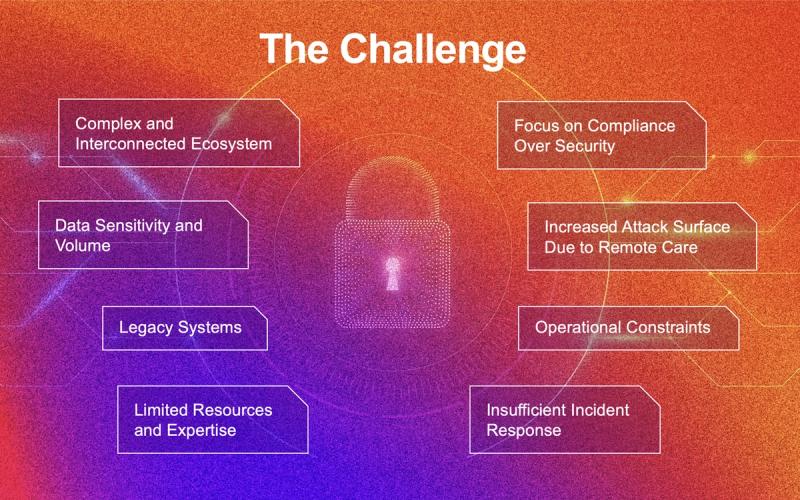
October is Cybersecurity Month, so what better time to point out that in the first half of 2024, the number of cyber attacks in healthcare grew exponentially. That’s concerning for a variety of reasons, including the fact that the average cost per breach is $9.77 million.
 Guide
GuideEstablishing a hospital’s integrated data ecosystem while implementing AI will help avoid data privacy issues. Five key components of data ecosystem integration success.
 Guide
GuideNearly half of all nurses are unhappy with their EHR usage experience and cite insufficient training as one reason why. Here are five best practices for nurse EHR training.
 Perspective
CIOs are using AI to improve diagnostic efficiency and health outcomes, at lower costs. These innovations grow revenue and are resulting in the CIO often reporting to the CEO instead of the CFO 63% of the time.